-1.png)
Will AI Shape Our Future or Fade Away
- Structure Makers
- Mar 9
- 3 min read

Artificial intelligence (AI) has sparked intense debate about its role in shaping the future. Some see it as a powerful tool that will transform industries and daily life, while others worry it might stall or even disappear under challenges. This post explores whether AI will continue to grow and influence our world or if it will eventually fade away.

The Current State of AI
AI has already made significant advances in many areas. From voice assistants like Siri and Alexa to recommendation systems on streaming platforms, AI touches millions of lives daily. In healthcare, AI helps detect diseases earlier by analyzing medical images. In transportation, self-driving cars are being tested on public roads.
These examples show AI’s growing presence. The technology uses large datasets and complex algorithms to learn patterns and make decisions. This ability to improve over time makes AI different from traditional software.
Challenges AI Faces
Despite progress, AI faces several hurdles that could limit its future impact:
Data quality and bias: AI systems depend on data, but if the data is biased or incomplete, the results can be unfair or inaccurate. For example, facial recognition software has struggled with accuracy across different ethnic groups.
Ethical concerns: Privacy, surveillance, and job displacement raise questions about how AI should be used. These concerns slow adoption and lead to calls for regulation.
Technical limitations: AI still struggles with understanding context, common sense, and creativity. Tasks requiring deep reasoning or emotional intelligence remain difficult.
Energy consumption: Training large AI models requires significant computing power, which has environmental impacts.
These challenges mean AI development must be careful and responsible to avoid setbacks.
Why AI Will Continue to Shape Our Future
Despite obstacles, several factors suggest AI will remain a key part of our future:
Investment and research: Governments and companies worldwide invest billions in AI research. This funding drives innovation and helps overcome technical barriers.
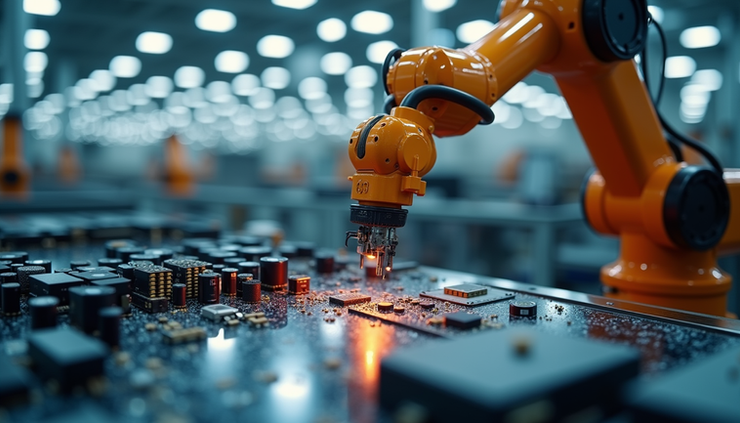
Integration into industries: AI is becoming essential in sectors like finance, manufacturing, and agriculture. For example, AI-powered robots improve efficiency on farms by monitoring crops and soil.
Improved algorithms: New techniques like reinforcement learning and generative models expand AI’s capabilities. These advances allow AI to tackle more complex problems.
Human-AI collaboration: AI is increasingly seen as a tool to assist humans, not replace them. For instance, doctors use AI to analyze scans but make final diagnoses themselves.
These trends indicate AI will evolve and embed itself deeper into society.
What Could Cause AI to Fade Away
While AI’s future looks promising, some scenarios could limit its growth or cause it to fade:
Public backlash: If AI causes widespread job losses or privacy violations, public trust could erode. This might lead to strict regulations or bans.
Technological plateau: AI development might hit a wall where improvements become too costly or complex. Without breakthroughs, progress could slow dramatically.
Economic shifts: Global economic downturns could reduce funding for AI research and deployment.
Ethical failures: Misuse of AI in areas like deepfakes or autonomous weapons could provoke international restrictions.
These risks highlight the need for careful management of AI’s development.
How to Prepare for an AI-Driven Future
Whether AI shapes our future or not depends partly on how society adapts. Here are practical steps individuals and organizations can take:
Stay informed: Understanding AI’s capabilities and limits helps make better decisions.
Develop new skills: Focus on skills that complement AI, such as creativity, critical thinking, and emotional intelligence.
Support ethical AI: Advocate for transparency, fairness, and privacy in AI systems.
Encourage collaboration: Promote partnerships between humans and AI to maximize benefits.
By preparing thoughtfully, we can guide AI toward positive outcomes.
Final Thoughts
AI has the potential to transform many aspects of life, but it also faces significant challenges. Its future depends on continued innovation, ethical use, and public acceptance. The technology is unlikely to fade away soon, given the investments and progress made. Instead, AI will probably become a stronger part of our world, changing how we work, learn, and interact.
The key is to approach AI with clear eyes—recognizing both its power and its limits—and to shape its development responsibly. This way, AI can become a useful partner in building a better future.


Comments